The Fed Stopped Guiding Markets. The 2-Year Moved 2bp — Warsh's July 2026 FOMC Presser
Chairman Warsh says pulling forward guidance let markets do the repricing. We pulled 20 years of Treasury data to check the claim, and the answer splits by tenor.

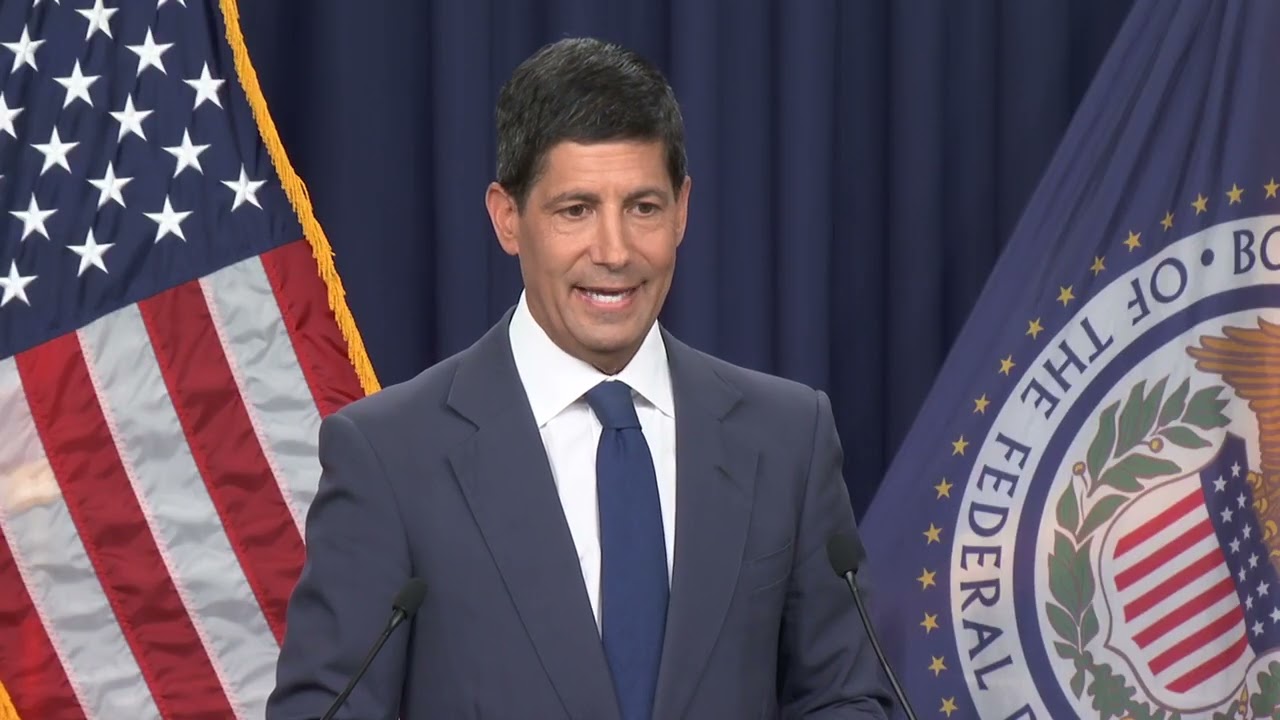
The Federal Reserve has stopped telling markets what it intends to do next. No forward guidance, no emphasis on the dot plot, a policy statement that Chairman Kevin Warsh describes as conveying “just the facts.” His July 29 press conference is the clearest account yet of why, and it rests on a specific empirical claim that anyone can check. So we checked it.
What changed
The Committee held the target range at 3½ to 3¾ percent on a 9-to-3 vote. The interesting part is not the hold; it is the rationale for the Fed’s silence between meetings.
“Market participants are learning to play the ball, not the referee — and market prices will continue to respond in the direction and magnitude they see fit.”
Warsh is explicit that the old approach was a crisis tool that outlived the crisis:
“Trying to tell people exactly what we’re going to do, offering forward guidance with clarity — as if we’re tying our own hands behind our back. Well, in crisis mode, that strikes me as a very prudent policy. But in more benign conditions, it strikes me as worth revisiting.”
And when reporters pressed for a reaction function instead, he declined to treat that as a different request:
“When some people that follow the Fed say, ‘Well, we don’t want your forecast — we don’t want your dot — we just want your reaction function,’ part of me hears the — ‘What we really want is your forecast; what we really want is your dot.’”
The claim we can test
The evidence Warsh offers that the new approach is working is this:
“Some of the increases in market interest rates between FOMC meetings are among the most significant in the last two decades, ranking around the top decile or so. But if the Committee didn’t change its policy rate, what happened?”
The implied answer: markets did the tightening themselves, unprompted, because the Fed got out of the way.
The window is the 42 days between the June 17 and July 29 meetings — Warsh refers to “42 days” repeatedly. Treasury publishes its daily yield curve, nominal and real, back well past 2006. So we pulled every trading day from 2006 through September 2026 (5,174 days), computed the change across that window, and compared it against every rolling 42-day change in the same history.
| Tenor | 17 Jun → 29 Jul | Move | Percentile vs 2006–2026 |
|---|---|---|---|
| Nominal 2-year | 4.20% → 4.22% | +2 bp | 51.7 |
| Nominal 5-year | 4.27% → 4.37% | +10 bp | 66.7 |
| Nominal 10-year | 4.49% → 4.67% | +18 bp | 75.8 |
| Nominal 30-year | 4.93% → 5.20% | +27 bp | 86.4 |
| Real (TIPS) 10-year | 2.23% → 2.41% | +18 bp | 81.1 |
| Real (TIPS) 30-year | 2.73% → 2.98% | +25 bp | 88.8 |
Because overlapping windows can be objected to, we also ran non-overlapping 42-day windows only. The picture is the same: 17 of 143 such windows saw a bigger rise in the 30-year real yield (12 percent), against 84 of 179 for the 2-year (47 percent).
What the data actually says
The magnitude claim survives at the long end. The 30-year real yield at the 89th percentile is close enough to “around the top decile or so” that the hedged wording holds. Warsh said “some of the increases,” not all of them, and he specifically flagged real yields in his prepared remarks. On his own terms, he is not overstating.
The narrative does not survive at the short end. The 2-year Treasury is the tenor that prices the expected policy path over the horizon that FOMC decisions actually govern. Over the whole 42 days in which markets were supposedly doing the Fed’s work unaided, it moved two basis points — a 52nd-percentile non-event, dead average for a six-week stretch since 2006.
That matters because of what the two ends of the curve mean. A repricing driven by markets re-reading the policy path shows up at the front. A move concentrated at 20 and 30 years, in real terms, is the signature of term premium, fiscal supply, and long-run inflation compensation — the parts of the curve least connected to whether the Fed hikes in September.
Warsh half-concedes the ambiguity himself when asked what markets are telling him:
“Interpreting markets is an imperfect business. We central bankers, like market pros, can think these things are overdetermined. But let me offer some speculation.”
Limits of our test
Three, stated plainly.
Rolling windows are not FOMC intermeeting windows. We compared against every 42-day period, not the ~160 actual intermeeting periods since 2006. The non-overlapping run is a partial answer, but a purpose-built intermeeting series could shift the percentiles by a few points. It would not turn +2 bp on the 2-year into a top-decile move.
“Market interest rates” is broader than the Treasury curve. Warsh may have had forward rates, swaps, or mortgage spreads in mind, and we did not test those. Treasury’s own published curve is the most defensible public series, which is why we used it.
A 42-day window inherits the Fed’s calendar. Warsh’s framing invites the comparison, but a period chosen because it sits between two meetings is not a neutral sample of market volatility.
On the sourcing
Every quote above was taken from the Fed’s official transcript of the press conference, not from the video captions, and each was checked back against the audio. That is not a formality here. The YouTube caption track renders the decision as “3½ to 3 percent”; the official transcript has 3½ to 3¾ percent. A caption file dropped a quarter point from the federal funds target range.
What to do with it
If you have been reading Fed communication for a signal about the next meeting, there is no longer one to read, and Warsh has said plainly that he does not intend to supply a substitute. His actual reaction function is the unremarkable one he stated aloud: tighten when underlying inflation rises with employment near equilibrium, loosen when it falls.
The practical shift is where you look. With guidance withdrawn, the front end stops being a transcript of Fed intentions and becomes a genuine market estimate — which, in the first full intermeeting period of the new regime, moved almost not at all. Read that as markets finding the current stance roughly appropriate, and read the long end as a conversation about something else entirely.
Warsh’s next set piece is Jackson Hole, which he described as “a blank piece of paper right now.”
Related reading
2026-09-07
xAI Got Permits for 15 Turbines and Ran 35 — CNBC in Memphis
CNBC's Memphis report is not really about pollution. It is about what happens to an AI buildout when the binding constraint stops being chips and becomes power, permits, and the patience of the people living next to it.
2026-09-07
300 AI Query Optimizations Went In, 30 Came Out — Datadog at DASH 2026
Most of Datadog's two-hour keynote is a product reel. One slide is not: the vendor selling you AI query optimization discloses that 90% of its model's suggestions failed validation.
2026-09-07
Andrew Ng Won't Sign an AI Contract Longer Than a Year — Interrupt 26
Ng's fireside chat at LangChain's Interrupt has one piece of advice with a number attached, and one example that explains why most enterprise AI projects produce a rounding error instead of growth.
2026-09-07
He Renamed One Function and the AI Did More Work — Alexandrescu at ACCU 2026
Andrei Alexandrescu's ACCU keynote argues abstraction survives AI-generated code for an unfashionable reason: not because humans need it, but because throwing it away is inefficient. He has an experiment to show it.
2026-09-04
'Unmetered Intelligence' Moves the Bill, It Doesn't Remove It — Nadella at Build 2026
Microsoft re-ran its founding slogan for the AI era and pushed inference to the edge. The per-token meter does come off — and reappears as hardware you buy up front.
Get the best tools, weekly
One email every Friday. No spam, unsubscribe anytime.