Figma's CEO Grades His Own AI Prediction: Floor Lowered, Ceiling Not Yet — Config 2026
Dylan Field predicted AI would lower the floor and raise the ceiling on design work. On his tenth Config stage he marked his own homework, and only half of it passed.
Product keynotes are not usually where you find a CEO conceding that half of their own thesis has not materialised. Six minutes into Figma’s tenth Config, Dylan Field does exactly that, and it is more interesting than anything shipped afterwards.
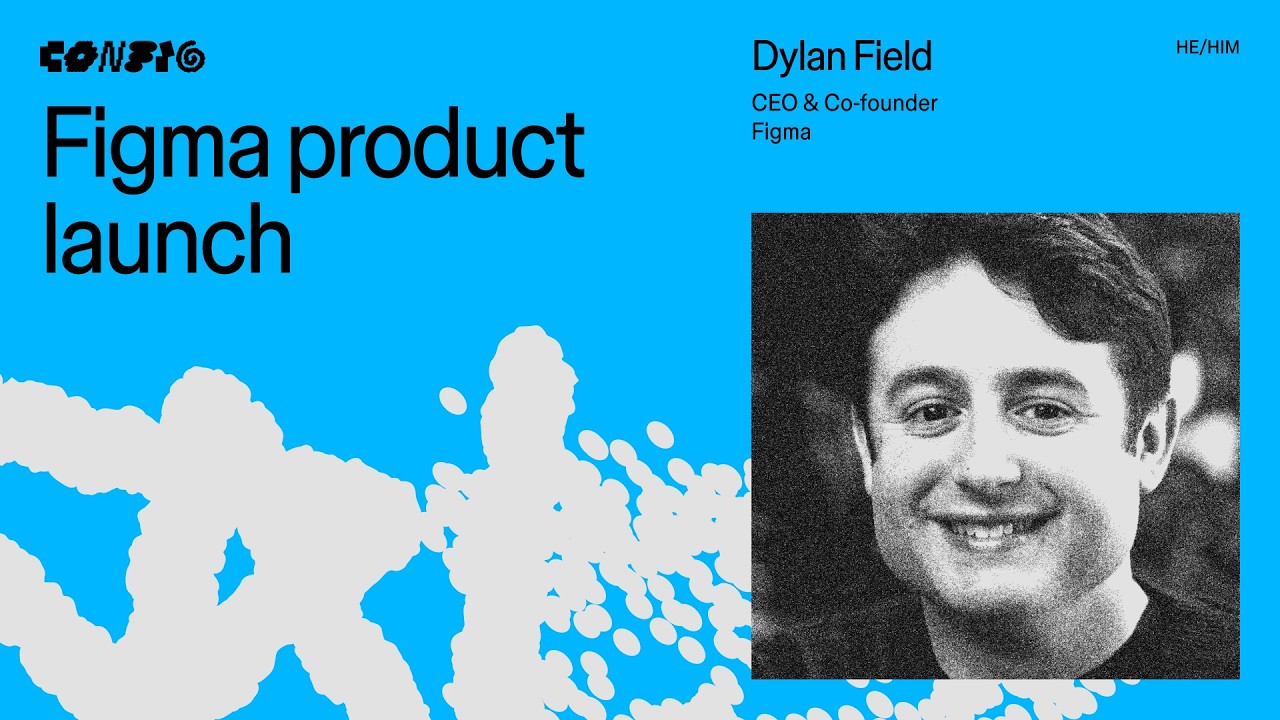
The prediction, and the grade
“A few years back, I said — maybe some of you were there — at Config that AI will lower the floor and raise the ceiling. And I think it’s been true, definitely, that AI has lowered the floor. Not so sure about raising the ceiling yet.”
Two claims, made together, graded separately. The first passed. The second is marked incomplete by the person who made it, on his own stage, in front of the audience it was made to.
Notice what that costs him rhetorically. “Lower the floor, raise the ceiling” is the standard defence of creative AI tools — it is the sentence that lets a vendor say the technology is additive rather than substitutive. Field keeps the first half and withdraws the second, which leaves him arguing that his tools have made competent work easier to produce without yet making excellent work better. He then hands the ceiling problem back to the room:
“So how do we raise the ceiling? I look out at all of you. You all raised the ceiling.”
That is a graceful move, and it is also an admission that the tooling has not done it.
Why the asymmetry matters more than the keynote
A lowered floor with an unmoved ceiling is not a neutral outcome. It is a specific claim about the distribution of work, and it has consequences that generalise well past design.
The price of competent output falls. When the number of people who can produce an acceptable result goes up and the acceptable result is unchanged, the market for that result gets crowded. This is already visible in the categories where the floor dropped first — landing pages, marketing sites, basic CRUD apps, template-shaped work of every kind.
The premium on the top end rises. If the ceiling has not moved, the people at it did not get more numerous. Scarcity holds while the supply of everything below expands. That is the mechanism by which “AI democratises creation” and “the best people are worth more than ever” are both true at once, and it is why they feel contradictory when stated separately.
The gap between them is where careers get decided. The uncomfortable version, which Field does not say and does not need to: the work that used to be a reasonable living — competent, unremarkable, reliably delivered — is exactly the band the floor rose into.
The other line worth keeping
The keynote’s product thesis is stated as a dismissal of a debate the industry has run for a decade:
“For years, the design industry has endlessly discussed this topic of design versus code, and I will just say it flat out right now. This is a false debate. Code is not the opposite of design. Code is material for design.”
The framing device — code as a material, “as shapeable as texture or color” — is doing real work. It reframes the question from who owns this artifact to what is this artifact made of, and if you have ever sat through a handoff argument between design and engineering, you will recognise how much of that argument was about ownership rather than about the work.
It is also, transparently, the framing that a company shipping design-to-code tooling needs to be true. Both things can be right.
What to take from it
Watch the first eight minutes and skip the product segments unless you use Figma. The prediction grading is the substance.
And borrow the format. “Lower the floor, raise the ceiling” was a good prediction because it was falsifiable in two independent parts, which is why Field could come back and mark one of them down. Most predictions about AI are not built that way — they are constructed so that any outcome confirms them. A claim you can return to in two years and score is worth more than a claim that is always right.
Related reading
2026-09-07
xAI Got Permits for 15 Turbines and Ran 35 — CNBC in Memphis
CNBC's Memphis report is not really about pollution. It is about what happens to an AI buildout when the binding constraint stops being chips and becomes power, permits, and the patience of the people living next to it.
2026-09-07
300 AI Query Optimizations Went In, 30 Came Out — Datadog at DASH 2026
Most of Datadog's two-hour keynote is a product reel. One slide is not: the vendor selling you AI query optimization discloses that 90% of its model's suggestions failed validation.
2026-09-07
Andrew Ng Won't Sign an AI Contract Longer Than a Year — Interrupt 26
Ng's fireside chat at LangChain's Interrupt has one piece of advice with a number attached, and one example that explains why most enterprise AI projects produce a rounding error instead of growth.
2026-09-07
He Renamed One Function and the AI Did More Work — Alexandrescu at ACCU 2026
Andrei Alexandrescu's ACCU keynote argues abstraction survives AI-generated code for an unfashionable reason: not because humans need it, but because throwing it away is inefficient. He has an experiment to show it.
2026-09-04
'Unmetered Intelligence' Moves the Bill, It Doesn't Remove It — Nadella at Build 2026
Microsoft re-ran its founding slogan for the AI era and pushed inference to the edge. The per-token meter does come off — and reappears as hardware you buy up front.
Get the best tools, weekly
One email every Friday. No spam, unsubscribe anytime.