OpenAI Daybreak vs Anthropic Glasswing for AppSec
Both launched the same week with overlapping enterprise partners and near-identical benchmarks. Here is how to run a bake-off that tells you something.
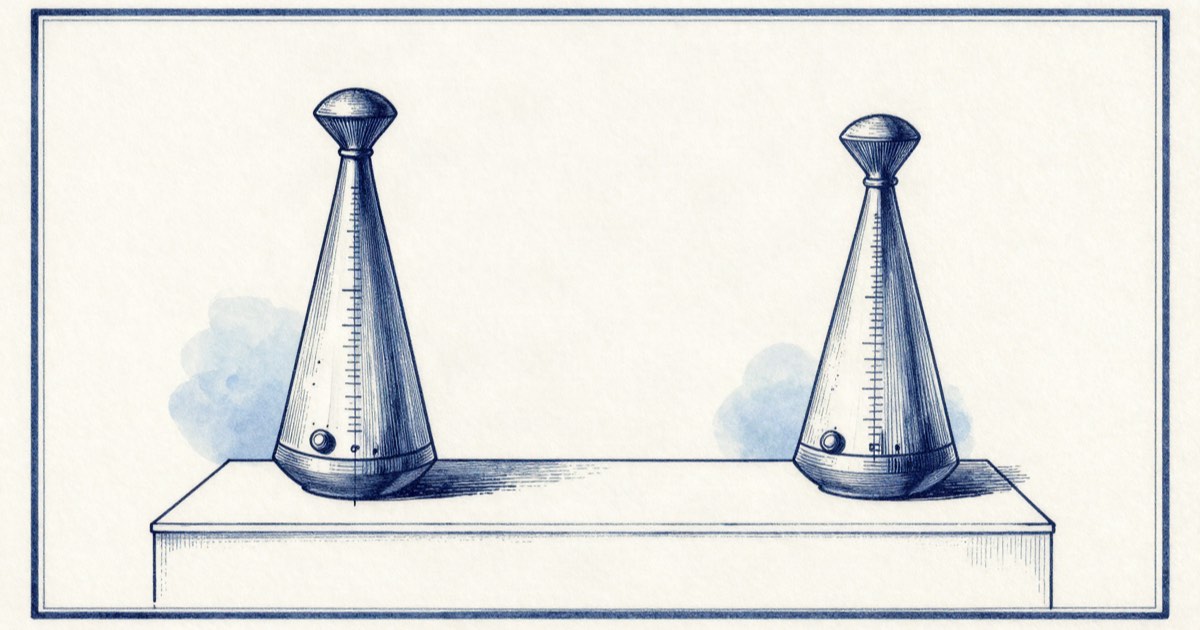
When two of the largest AI labs ship cybersecurity products in the same week — with overlapping enterprise design partners and benchmark results within a percentage point of each other — the convergence is the news. OpenAI’s Daybreak (built on GPT-5.5 with a Codex Security fine-tune) and Anthropic’s Glasswing landed days apart, both targeting application security teams, both pitching tiered access, both leaning on the same Fortune 100 names as launch references.
You can read this two ways. Either both labs independently arrived at the same product shape because the market demands it, or the AppSec category has crystallized into a template and the labs are racing for distribution. Neither reading is flattering to the “moat” narratives we’ve been hearing for two years.
The mirror launch nobody planned
Daybreak and Glasswing don’t just rhyme — they share architecture decisions. Both ship a tiered access model: a self-serve tier for individual developers, a team tier with private code indexing, and an enterprise tier with on-prem evaluation harnesses, custom rule packs, and SOC2/HIPAA contractual scaffolding. Both lean on the same three enterprise design partners publicly named in their launch posts. Both report benchmark scores on similar SAST/DAST evaluation sets — close enough that any honest comparison has to caveat “within margin of error.”
What changed in the last six months is that underlying model capability cleared a bar. Once a frontier model can read a 200K-token monorepo, follow a tainted data flow, and explain its reasoning in a way that a senior security engineer accepts, the productization becomes mechanical. Tiers, audit logs, SSO, regional data residency — none of that is differentiation. It’s table stakes.
What “near-identical benchmarks” actually means
When two products report scores within a point on the same evaluation suite, you should be suspicious — not of the vendors, but of the benchmark. SAST and DAST evaluation has historically been a mess. The benchmarks both labs reference include synthetic vulnerable code generated to demonstrate specific CWE patterns. A frontier model with a security fine-tune can saturate them. That tells you the ceiling of the test, not the ceiling of the tool.
The benchmark that matters for your evaluation is your own codebase. Three concrete signals worth testing:
- False positive rate on your existing PR queue. Run both tools against the last 100 merged PRs that were not flagged by your current SAST. If either surfaces real issues your existing pipeline missed, that’s a signal. If both surface mostly the same noise, the differentiator is somewhere else.
- Reasoning quality on a known issue. Take a CVE you patched in the last year. Strip the fix, feed the vulnerable revision to both tools, and read the explanation. The model that helps a mid-level engineer understand why it’s a vulnerability is the model that scales across your org.
- Triage latency in CI. Both tools advertise sub-minute analysis for incremental diffs. Measure it on your repo, on your CI runner, under your typical PR load. Marketing numbers come from clean rooms.
Choosing between Daybreak and Glasswing for your pipeline
For most teams the choice will come down to factors that have nothing to do with the model:
- Which lab already has your enterprise agreement. If you have an OpenAI enterprise contract with negotiated data handling terms, Daybreak slots in with minimal procurement friction. Same for Anthropic and Glasswing. The contract path matters more than the capability delta at this point.
- Where your code lives. Both offer GitHub-native flows. GitLab and Bitbucket support varies — check before assuming parity.
- How you feel about model lock-in. A security tool that bakes into your CI is a multi-year commitment. The model behind it will be deprecated, pricing will change, and the fine-tune will drift. Plan the migration before you adopt either.
The convergence between Daybreak and Glasswing is itself the most useful signal. When two of the most capability-competitive labs ship near-identical products in the same week, the category is commoditizing faster than either of them will admit publicly. That’s good for you as a buyer. Pricing pressure is coming, open-source alternatives are catching up (Semgrep’s LLM rule layer is the one to watch), and the lock-in cost of either choice is lower than the marketing suggests.
If you’re staffing a developer team that needs to evaluate both tools as part of a broader AI tooling refresh, remember that the underlying productivity gain still comes from the editor, not the scanner. The scanner catches what slips through; the editor prevents the slip in the first place.
Cursor
The AI-first editor most security-conscious dev teams are pairing with their AppSec pipeline. Inline review and predict-mode catch issues before a PR is ever opened — reducing what either Daybreak or Glasswing would need to triage downstream.
Free tier; Pro at $20/mo per user; Business tier with SSO and audit logs
Affiliate link · We earn a commission at no cost to you.
FAQ
Are Daybreak and Glasswing replacing traditional SAST tools like Semgrep or Snyk?
Can I self-host either Daybreak or Glasswing?
Which one should I pilot first if I only have time for one?
Related tools
Beehiiv
Newsletter platform with built-in ad network and Boost referrals.
Try Beehiiv →
Webflow
Visual site builder with real CSS export and a CMS that scales.
Try Webflow →
Audiorista
No-code audio app builder for podcasters and audio creators.
Try Audiorista →
Some links above are affiliate links. We may earn a commission if you sign up. See our disclosure for details.
Related reading
2026-05-26
NVIDIA Warp Review: GPU-Accelerated Python for Simulation and Robotics
A measured review of NVIDIA Warp, the open-source Python framework that compiles kernels to CUDA. How it compares to JAX and Taichi, and when to reach for it over PyTorch.
2026-05-26
ROCm in 2026: PyTorch on the RX 7900 XTX Still Falls Short
Hands-on notes on ROCm 6.x and PyTorch Lightning for ML research, including where the 24 GB AMD card is genuinely competitive.
2026-05-26
GPT-5.5 Instant vs GPT-5.3: Three Claims Tested
OpenAI quietly swapped ChatGPT's default. We check the speed, reasoning, and accuracy claims and what they mean for API builders.
2026-05-26
Macchiato Day 2: Live Token Metrics and Parallel Terminals for Claude Code and OpenCode
Macchiato's Day 2 update lands a live token/cost sidebar, consumption dashboards, and keyboard shortcuts for jumping between Claude Code and OpenCode in one terminal. Here is what shipped and who should care.
2026-05-21
Forgelab PDF API Review: Merge, Split, Compress from $5/mo
Merge, split, compress, and PDF-to-image through one REST endpoint. A hands-on look at what it leaves unspecified and when hosted beats self-hosting.
Get the best tools, weekly
One email every Friday. No spam, unsubscribe anytime.