CodeRabbit vs Greptile vs Graphite: AI Code Review Bots Compared for 2026
A mechanism-level comparison of three AI pull request reviewers — how each one builds context, how noisy it is by design, and how to bake them off on your own repo before buying seats.
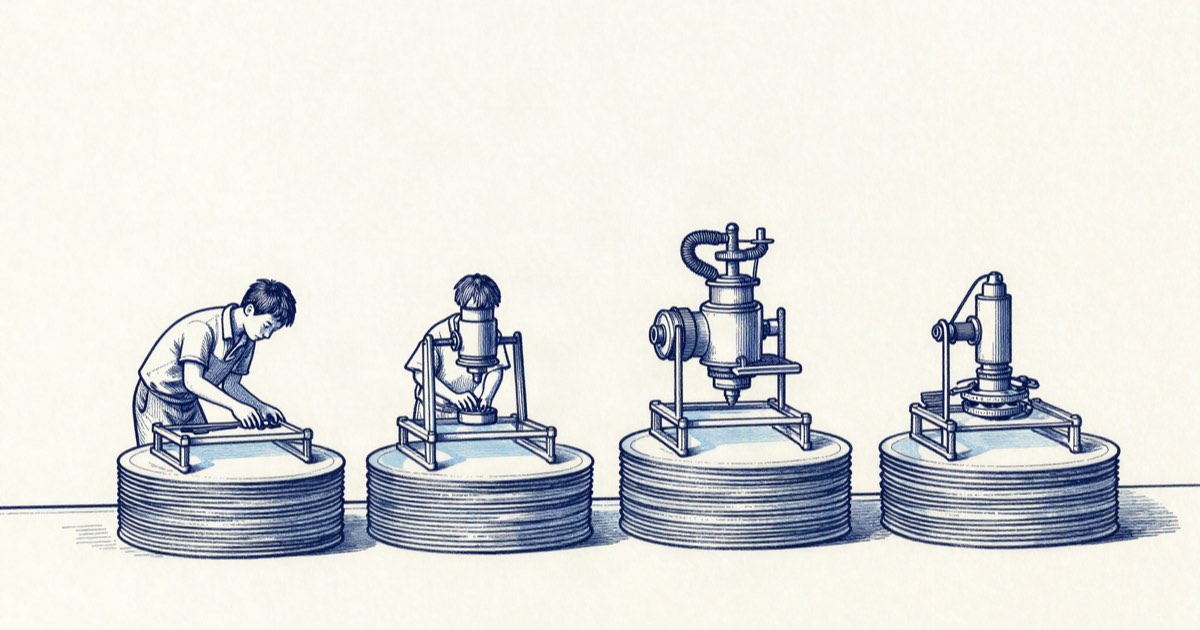
Every AI code review bot demos well. It attaches to a pull request, leaves six comments, and two of them look sharp enough to screenshot. The number that decides whether you keep paying shows up three months later: how many of those comments did somebody act on, and how quickly did the rest of the team learn to scroll past the bot?
CodeRabbit, Greptile, and Graphite answer that differently — not because one has a better model, but because each picks a different point on the precision/recall curve and wires itself into a different part of your workflow. We read the docs, changelogs, and public review output for all three. The split is sharper than the marketing suggests.
What each bot does the moment a PR opens
All three install as a GitHub app (GitLab and Bitbucket support varies by vendor), subscribe to pull request events, and post back as a bot account. What happens in between is where they separate.
CodeRabbit produces the most output per PR. You get a plain-language summary of the change, a file-by-file walkthrough, and inline comments anchored to specific lines. It also runs a bundle of conventional static analyzers in the same pass — linters, secret scanners, and security rules selected by the languages it detects — and merges those findings into the same review, so one thread carries both the model’s opinion and the deterministic tooling. You can reply to any comment in the PR thread and it answers with the diff in context, which makes it usable as a rubber duck as well as a reviewer.
Greptile leads with repository indexing. Before it reviews anything it builds an index over the whole codebase and uses that to answer a question a diff-only reviewer structurally cannot: does this change break an assumption that lives in a file the PR never touches? Its stated aim is fewer comments that carry more weight, rather than complete line-by-line coverage. That indexing step is also why the first run on a large monorepo takes noticeably longer than the second.
Graphite comes at review from the workflow side. Graphite is a stacked-pull-request tool first — it exists so you can ship small dependent PRs in order, with a merge queue behind them. Its AI reviewer inherits that context: it knows a PR is the third of five in a stack, and it is tuned to stay quiet unless its confidence clears a bar. If your team already stacks with Graphite, the reviewer is a setting you turn on, not a new vendor to onboard.
| Tool | Primary context | Review style | Strongest fit |
|---|---|---|---|
| CodeRabbit | Diff plus linters and scanners | High volume, conversational, replies in-thread | Teams with thin lint/CI coverage that want breadth |
| Greptile | Whole-repo index | Fewer comments, cross-file reasoning | Large or legacy codebases where context lives elsewhere |
| Graphite | Diff plus stack position | Deliberately quiet, confidence-gated | Teams already stacking PRs behind a merge queue |
The three tradeoffs that actually decide it
Diff context versus repo context. A diff-scoped reviewer catches null handling, off-by-ones, missing error paths, and style drift. It cannot catch “this new default contradicts the invariant asserted in a module three directories over.” Repo indexing is what buys that second class of finding, and it is also what costs latency and money. If your bugs are mostly local, you are paying for an index you don’t need. If your bugs come from a service someone left behind two years ago, that index is the entire reason to buy.
Noise policy. This is a product decision each vendor made, not an accident. CodeRabbit optimizes for surfacing everything and letting you filter; Graphite optimizes for never spending your attention on a maybe. Neither is wrong — it depends on whether your team’s bottleneck is review coverage or review fatigue. Ask which failure you’d rather absorb, because you cannot avoid both.
Where review already lives. Adoption almost always fails on workflow, not accuracy. A bot posting into a PR nobody opens because the team reviews in a stacked tool, or in an IDE, is dead weight. Pick the one that lands in the surface your reviewers already have open.
On price: all three sell per-developer monthly seats in a similar band, with free tiers for open-source or public repositories and enterprise plans that add self-hosting and SSO. Those numbers move. Read the pricing page the week you buy rather than trusting any comparison post, this one included.
One thing none of them fix: the cheapest review is the one that happens before the PR exists. An agent that reads the diff in your editor and flags the obvious problems while you still have the context loaded removes work from the bot entirely.
Cursor
AI-native editor with repo-wide context and an agent that can review your working tree before you push. Cuts the volume of trivial findings a PR bot has to catch.
Free tier available; paid plans billed per user per month
Affiliate link · We earn a commission at no cost to you.
Run a two-week bake-off instead of reading reviews
Benchmarks published by vendors, and comparison articles like this one, tell you how these tools behave in general. They cannot tell you how one behaves on your repo, which is the only question you’re actually asking. Run this instead:
- Pick 20 recently merged PRs that a human already reviewed carefully, spanning your real mix — a schema migration, a dependency bump, a refactor, a feature, a hotfix.
- Enable one bot at a time on a fork or a branch, and let it review those PRs. Running two at once poisons the signal, because reviewers start comparing bots instead of judging comments.
- Label every comment as one of: caught a real defect, useful nit, restates something the linter already said, or wrong. Four buckets, one pass, no debate.
- Compute two ratios — real defects per PR, and wrong-plus-redundant as a share of total comments. The first is the value. The second is the tax.
- Check the overlap with your existing CI. If half a bot’s findings duplicate rules you already run, you’re paying per seat for a second linter.
A team of four can finish that in an afternoon per tool. It will beat any amount of feature-table reading, because it measures the thing that varies most between codebases: how much of your defect surface is visible in a diff at all.
FAQ
Can an AI reviewer replace human code review?
Do these tools send my source code to a third-party model?
Is it worth running two review bots at once?
Related tools
Some links above are affiliate links. We may earn a commission if you sign up. See our disclosure for details.
Related reading
2026-09-07
Grok 4.6 Scores 26% and 88% on the Same Benchmark Line
xAI's own model card reports Terminal-Bench 3.0 at 26.0%. Artificial Analysis reports 88.4% on 2.1. Both are the same model. The model card is unusually honest about why — the problem is everyone quoting it drops the qualifiers.
2026-09-02
DeepSeek MLA: 70 GB of KV Cache at 1M Tokens
No DeepSeek-V4 config is public yet. The V3 one is, and its KV-cache math tells you what a million-token window actually costs in GPU memory.
2026-08-13
AI Agent Auth: API Keys vs Device Flow vs Scoped Tokens
Three credential models for non-human callers: static keys, the OAuth 2.0 device grant, and short-lived scoped tokens - and when each one fits.
2026-08-13
Error Messages as an Agent Interface
A field-by-field guide to API error bodies: stable codes, retryable flags, wait hints, fix examples, and the shapes that trap agents in retry loops.
2026-08-12
Writing a Spec an AI Agent Can Actually Execute
Ground truth files, an interface contract, one acceptance command, and explicit out-of-bounds rules -- so the agent runs end to end without babysitting.
Get the best tools, weekly
One email every Friday. No spam, unsubscribe anytime.